
Japanese tattoos: history, symbols, and iconic styles
Japanese tattoos, also known as Irezumi, fascinating for centuries with its symbolic richness, powerful motifs, and immediately recognisable aesthetic. Much more than a simple graphic style, it is a true narrative art, deeply rooted in the culture and history of Japan. Dragons, koi carp, cherry blossoms, and traditional masks all tell a story, often linked to courage, perseverance, or the balance between strength and spirituality. In this article, let's discover together the world of Japanese tattooing, its origins, its symbols, and what makes it a timeless style.
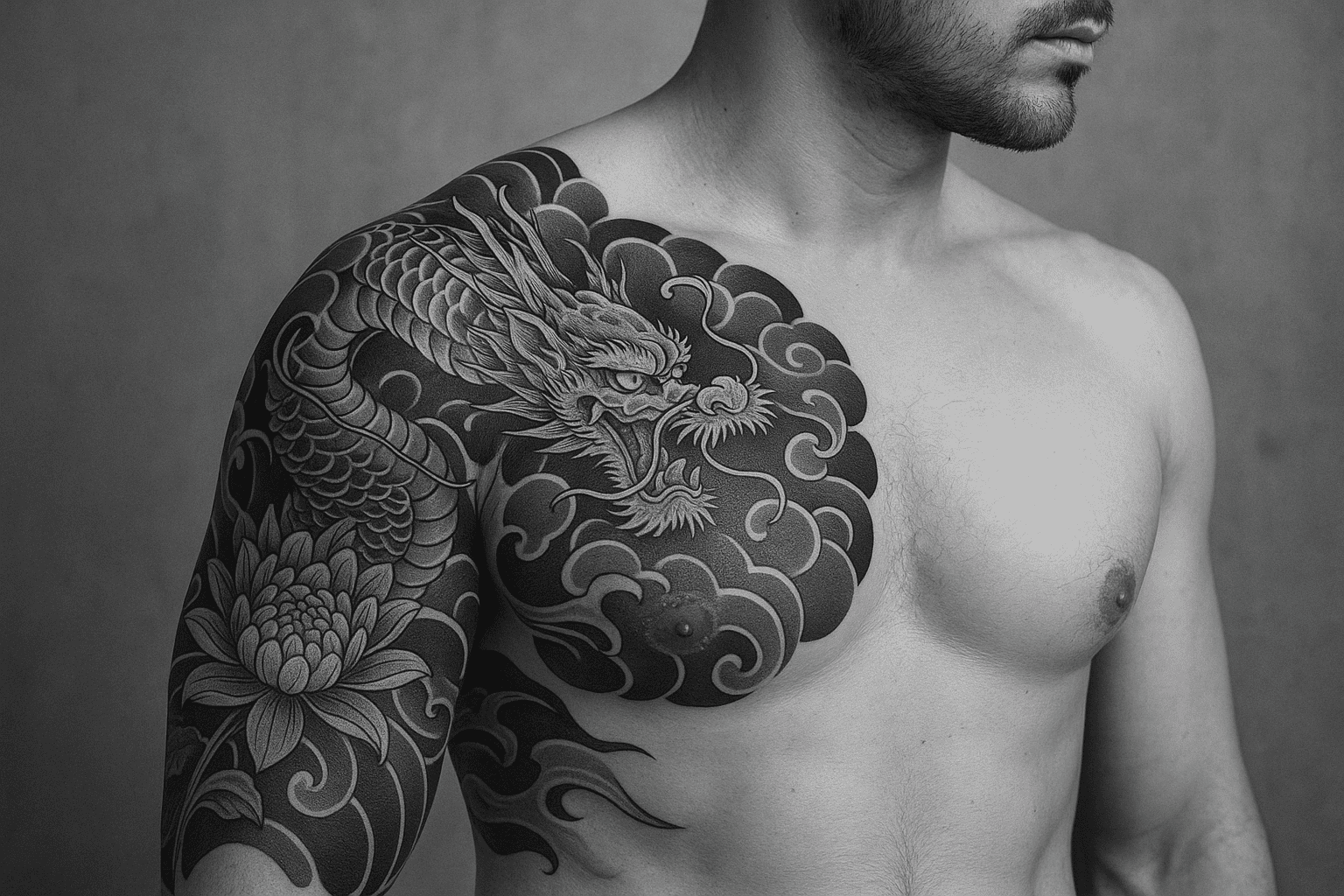
The origins of Japanese tattooing
Japanese tattooing has its roots several centuries BC. Originally, it served both spiritual and identity purposes. However, its image has evolved over time.
- In ancient times, tattoos were used for spiritual protection or as a mark of belonging.
- During the Edo period (1603–1868), the tattoo takes on a major artistic dimension. It is particularly inspired by Japanese prints (ukiyo-e).
- Paradoxically, it is also used as a punitive brand for criminals, which contributes to its stigmatisation.
- Later, The Japanese tattoo becomes associated with the yakuza, reinforcing its marginalised image, despite its artistic merit.
Today, Japanese tattooing is recognised globally as an art form in its own right, respected for its complexity and symbolism.
What characterises Japanese tattooing?
Traditional Japanese tattooing is distinguished by several key elements:
- Large patterns, often carried out in complete pieces (full back, full arm, leg).
- A fluid composition, which hugs the body's contours.
- Worked funds (hazy, cloudy, windy, smoky) giving depth and movement.
- A palette of strong colours, although black and grey are also widely used.
- A visual narrative, each tattoo tells a coherent story.
Thus, a Japanese tattoo is never chosen at random: each element has a precise meaning.
The most popular Japanese tattoo symbols
The Dragon (Ryū)
A symbol of wisdom, strength, and protection. Unlike Western dragons, the Japanese dragon is benevolent and linked to the elements of nature, particularly water.
The koi carp
It represents perseverance, courage, and success. According to legend, a carp capable of swimming up a waterfall transforms into a dragon.
The tiger
A symbol of power, bravery and protection against evil spirits. It also embodies the balance between strength and control.
Japanese flowers
- Cherry blossom (Sakura) Ephemeral beauty, impermanence of life.
- Peony richesse, honneur et courage.
- Lotus Purity, rebirth, spiritual elevation.
Traditional masks
- Hannya human emotions, jealousy, anger, passion.
Ogre Protective demons, justice and punishment.
Traditional Japanese tattoo vs. modern
The traditional style (Irezumi)
- Handmade (Tebori) or by machine
- Respect for strict graphic codes
- Large rooms often only visible when undressed
- Composition thought out over several years
Modern Japanese style
- Adaptation to smaller formats
- Mix with other styles (fineline, blackwork)
- Colours sometimes more sober
- Japanese symbols incorporated into a contemporary aesthetic
Thus, it is now possible to opt for a discreet Japanese tattoo while respecting the spirit of the style.
Where to place a Japanese tattoo?
Japanese tattoos express themselves particularly well on large surfaces:
- Two whole centrepiece, very traditional
- Arm or leg cuff Fluid and dynamic composition
- Shoulder and chest ideal for dragons and tigers
- Flanks and ribs natural body movement
However, some symbols can also be adapted for smaller areas such as the forearm or calf.
Pain and healing
Japanese tattoos often require multiple sessions, which calls for endurance and patience.
- Variable pain depending on the area (back and arms more bearable than ribs or sternum).
- Scarring :
- 2 to 3 weeks on the surface
- 4 to 6 weeks in depth
- Care is essential to preserve the colours and the sharpness of the details.
Why choose a Japanese tattoo?
Choosing a Japanese tattoo is:
To wear a strong and timeless symbol
Tell a personal story.
To enrol in a millennial artistic tradition
Choose a structured and durable tattoo
To enhance the body through harmonious composition
Do you need to see more of our piercer's work to help you decide?
Click on her Instagram below!
THE PIERCER

Bertier
Piercer and shop owner
The importance of choosing an experienced tattoo artist
Japanese tattooing demands excellent mastery of drawing, composition, and symbols. A specialist tattoo artist will know how to:
- Create a cohesive and balanced piece
- Respect traditional codes
- Adapt the pattern to your body shape
- Ensure durable performance over time
Conclusion:
Japanese tattooing is far more than just a style: it's a true philosophy inscribed on the skin. Laden with history, symbols, and emotion, it endures through time without losing its power. Whether you choose an imposing piece or a more discreet motif, the essential thing is to understand its meaning and entrust your project to a passionate professional.
Timetable
Tuesday
12:00 - 19:00
Wednesday
12:00 - 18:00
Thursday
3pm - 8pm
Friday
12 pm - 7 pm
Saturday
13:00 - 17:00
Address
22 AV. ERNEST PICTET
1203 GENEVA