
Ear piercing: styles, aftercare and trends
Whether for a subtle look or a bold style, there's a multitude of ear piercings to suit every desire. From the classic lobe to more original ones like the rook, daith, tragus, industrial, or even the anti-helix, each piercing has its own specificities and healing process.
If you're considering getting your ears pierced or want to learn more about the different types of jewellery suitable for each piercing, this guide will provide you with all the essential information.
The different types of ear piercings
The ear offers numerous possibilities for piercing. Here are the main categories:
Lobe piercing: the classic choice
The lobe piercing is the most common and least painful, as this area is mainly made up of flesh and not cartilage. It's ideal for a first piercing and can accommodate a wide variety of jewellery types, from small studs to more substantial rings. Healing is relatively quick, approximately 6 to 8 weeks.
Helix and anti-helix piercings: varied styles
The helix piercing is located on the upper rim of the ear, where the cartilage is more rigid. It can be single or multiple and allows for hoops, barbells, or more original jewellery to be worn. This piercing generally takes 3 to 6 months to heal completely.
The anti-helix, located opposite the helix, is a bold choice that adds character to the ear. It can be combined with other piercings like the flat for a harmonious effect.
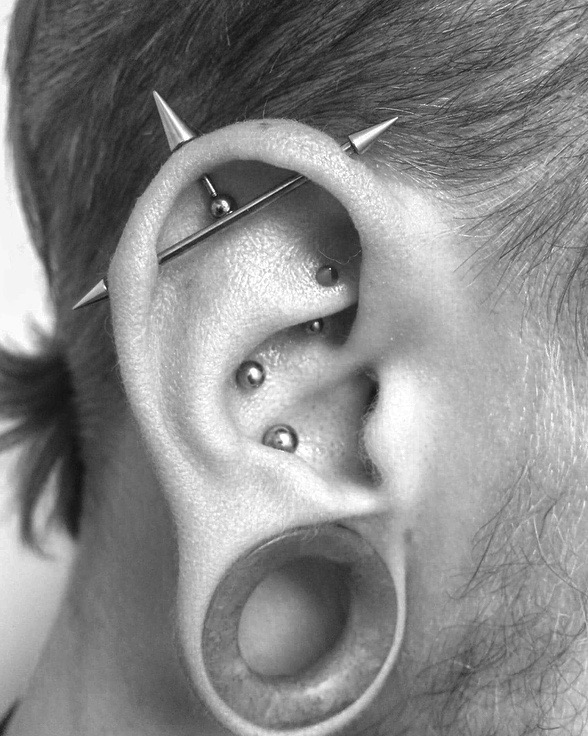
Industrial piercing: a trendy double piercing
The industrial piercing consists of two piercings joined by a straight barbell that passes through the upper part of the ear. It's a bold choice that provides a unique style. As it goes through two points of cartilage, healing can take longer, between 6 months and 1 year, and requires rigorous aftercare.
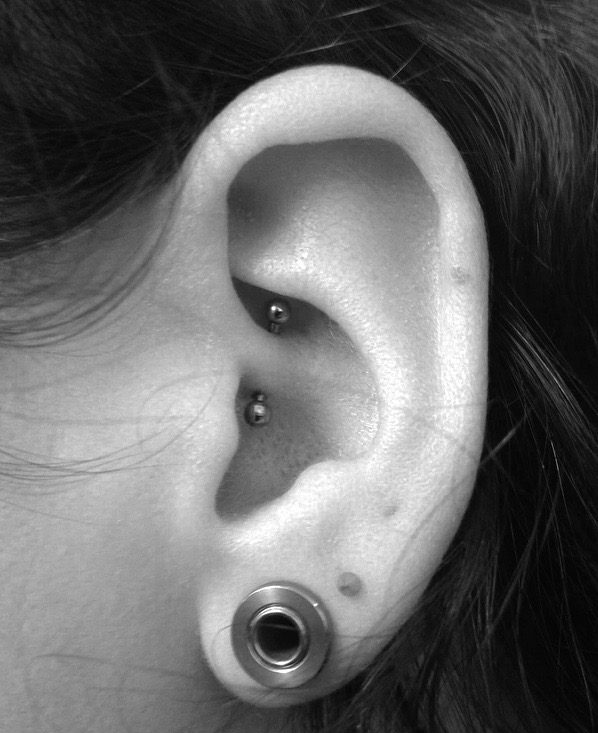
Rook piercing: a discreet and original piece of jewellery
The rook is a piercing made in the inner fold of the cartilage, just above the daith. It is often adorned with a horseshoe or a ring. Its healing time varies between 4 and 9 months, depending on the care provided.
Daith piercing: aesthetic and potentially beneficial
The daith piercing is located in the inner fold of cartilage, just above the ear canal. In addition to its aesthetic appeal, some believe it may help relieve migraines, although this is not scientifically proven. It typically takes 4 to 6 months to heal.
Tragus piercing: an elegant choice
The tragus is a piercing located on the small piece of cartilage in front of the entrance to the ear canal. It's popular for its discreet yet trendy look. As it passes through thick cartilage, it takes 3 to 6 months to heal.
Anti-tragus piercing: an original variation
The anti-tragus is located just above the lobe, opposite the tragus. Less common than its counterpart, it is nevertheless very aesthetically pleasing and allows for the wearing of rings or studs. Healing can take 4 to 8 months.
Piercing snug: for a unique look
The snug is a horizontal piercing that goes through the inner cartilage of the ear. It is often more painful due to the density of the cartilage and requires 6 to 12 months to heal.
Flat piercing: minimalist and modern
The flat is located on the flat part of the cartilage, just above the helix. It is ideal for those looking for a subtle and minimalist piercing. Healing takes approximately 3 to 6 months.
Do you need to see more of our piercer's work to help you decide?
Click on her Instagram below!
THE PIERCER

Bertier
Piercer and shop owner
Piercing and healing
All ear piercings are performed with a sterile needle, ensuring a cleaner and less traumatic procedure than a gun. Pain varies depending on the area pierced, with cartilage generally being more sensitive than the lobe.
Aftercare is essential to prevent infection and ensure proper healing:
- Clean twice a day with a saline solution or physiological serum.
- Avoid touching the piercing with dirty hands.
- Do not change the jewellery until healing is complete.
- Avoid shocks and pressure (helmets, pillows, headphones).
Le cutting: An extreme technique for body art enthusiasts
Cutting is a technique that involves cutting away a part of the cartilage to create a specific shape. Although not widespread, it is favoured by some enthusiasts of extreme body modifications. This procedure is more invasive than a simple piercing and requires rigorous medical follow-up.
What jewellery should I choose for an ear piercing?
The choice of jewellery is crucial for the comfort and aesthetics of the piercing.
- For the lobe: hoops, studs, drops.
- For the helix and flat: thin rings, short barbells.
- For the tragus and anti-tragus: small, discreet studs.
- For the rook and the daith: horseshoe or captive bead rings.
- For the industrialist: long bars adapted to the anatomy of the ear.
To conclude, ear piercings offer an infinite variety of styles and personal expressions. Whether you want a discreet piercing like the lobe or a bolder look with an industrial or snug, it is essential to be well-informed before taking the plunge.
A good professional piercer, quality jewellery, and rigorous aftercare will ensure optimal healing and a long-lasting piercing. Don't hesitate to explore the many options available and choose the piercing that best suits your style and personality!
Timetable
Tuesday
12:00 - 19:00
Wednesday
12:00 - 18:00
Thursday
3pm - 8pm
Friday
12 pm - 7 pm
Saturday
13:00 - 17:00
Address
22 AV. ERNEST PICTET
1203 GENEVA